


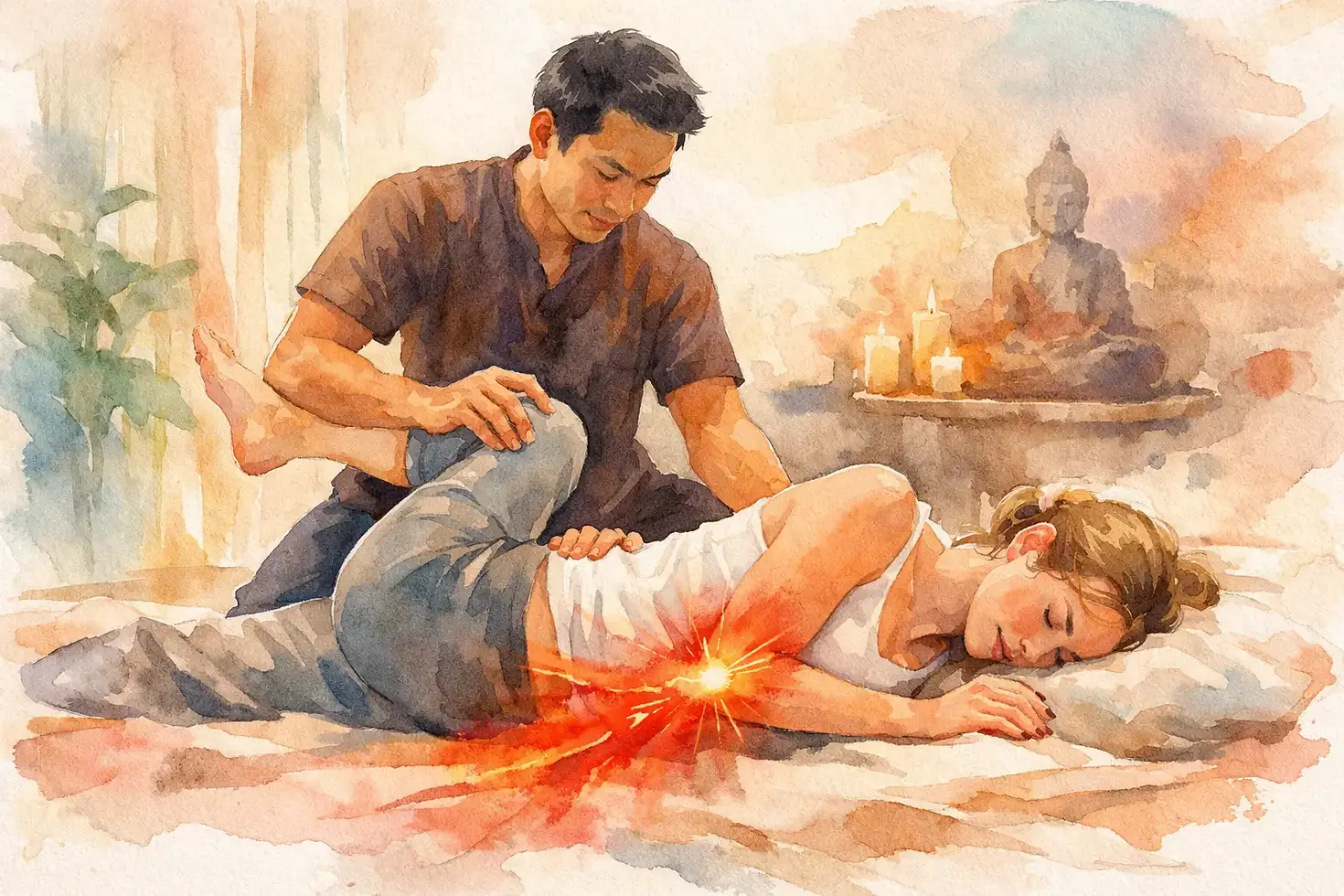
Does Thai Massage Help Sciatica Symptoms?
- veerakaj01
- 4 days ago
- 6 min read

Sciatica can make an ordinary walk, car ride, or night of sleep feel like a test of endurance. So, does Thai massage help sciatica? For some people, it can reduce the muscle tension, guarding, and stress that make sciatic-type pain feel louder. But it is not a cure for every cause of sciatica, and the quality, timing, and sensitivity of the treatment matter greatly.
The word “sciatica” describes symptoms, not one single condition. The familiar burning, tingling, numbness, or shooting pain traveling from the low back or buttock into the leg may come from irritation of the sciatic nerve or its nerve roots. A disc problem, spinal narrowing, joint irritation, deep gluteal muscle tension, injury, or another medical condition may be involved. This is why a caring therapist does not make promises before listening to your body and your health history.
Does Thai Massage Help Sciatica? The Honest Answer
Traditional Thai massage may help when pain is strongly influenced by tight hips, overworked gluteal muscles, restricted movement, protective muscle spasms, poor recovery, and ongoing nervous-system stress. Thai bodywork combines mindful pressure, supported movement, gentle stretching, and attention to breathing. Rather than simply pressing on a painful spot, a skilled practitioner looks at how the feet, legs, pelvis, lower back, and even habitual posture may be sharing the load.
For a person whose symptoms are aggravated by long flights, desk work, driving, emotional stress, or muscular tension around the hips, this can create meaningful relief. The aim is not to force the body open. It is to help it feel safe enough to release what it has been holding.
Deep relaxation has a practical role here. Pain often makes the body brace itself. When the nervous system remains in alarm, muscles may stay tense even when you are trying to rest. Slow, respectful touch and calm breathing can support a shift out of that protective state. Many clients feel lighter through the hips and legs after a session, move more freely, and sleep more deeply that night.
Still, relief is not the same as treatment for the underlying medical cause. If a disc is pressing on a nerve, for example, massage cannot remove that disc issue. It may support comfort and mobility alongside appropriate medical care, but it should never replace an examination when symptoms are severe, unfamiliar, or worsening.
When Thai Bodywork May Be a Good Fit
Thai massage is often most helpful after acute pain has settled enough that touch and gentle movement feel tolerable. The best session is individualized, not a performance of dramatic stretches or intense pressure. A therapeutic practitioner may use a lighter approach around irritated areas, work gradually with the legs and hips, and choose positions that do not strain the low back.
It can be especially supportive if you notice that your symptoms change with stress, sitting, walking, or muscle tightness. Perhaps your buttock feels clenched after a long day, your hip movement is limited, or your leg pain is worse after hours in one position. These patterns can suggest that surrounding tissues and movement habits deserve attention, even though they do not tell the whole medical story.
A session may also give you something people in pain often lose: trust in movement. When every bend feels threatening, the body can become fearful and stiff. Gentle, pain-aware movement can remind you that not every sensation means harm. That process should be slow and respectful. Therapy massage may include some strong sensations, but sharp, electric, burning, or radiating pain is not a sign that the work is “effective.” Tell the therapist immediately.
When Massage Should Wait
Please seek prompt medical assessment rather than booking massage first if you have new or increasing leg weakness, foot drop, numbness around the groin or saddle area, loss of bladder or bowel control, fever, unexplained weight loss, severe pain after a fall or accident, or pain that is constant and rapidly worsening. These symptoms need medical attention.
Massage should also be postponed or specifically cleared by your medical professional when there is a suspected fracture, active infection, blood clot risk, uncontrolled osteoporosis, recent surgery, cancer-related concerns, or a condition where pressure and stretching may not be appropriate. Pregnancy, blood-thinning medication, and significant circulation issues also call for a more careful conversation.
This is not fear. It is good therapeutic care. A massage can be deep treatment, and safe treatment begins before hands touch the body.
The Intake Conversation Is Part of the Treatment
Before a session, you should be asked to complete a health form and speak openly about your symptoms. When did the pain begin? Does it travel below the knee? Is there numbness, weakness, or a recent injury? What movements worsen it? Have you seen a doctor, physiotherapist, or chiropractor? What medications are you taking?
A good therapist will also ask what you want from the appointment. Do you need profound relaxation because pain has exhausted you? Or are you looking for carefully paced therapeutic work to address persistent muscular tension? Both are valid, but they require different choices in pressure, stretching, and pace.
At Thai Holistic Massage, this personal attention is central to the experience. A session is not an assembly line. The practitioner observes your movement, listens to your story, and adjusts the work to meet the body in front of them.
What a Safe Sciatica-Aware Session Feels Like
You do not need to endure a painful massage to receive a therapeutic one. A practitioner may begin away from the most sensitive area, allowing the feet, calves, thighs, and hips to soften before approaching the lower back. Supported Thai stretches can be helpful, but only within your comfortable range. Sometimes the wisest choice is almost no stretching at all.
Breathing matters. During a stretch or pressure point, slow exhalation tells the body it does not need to fight. If you catch yourself holding your breath, tightening your jaw, or lifting your shoulders, the pressure may be too much. Speak up. Your feedback is not an interruption - it guides the treatment.
The oils and products used also deserve care. If oil massage is part of the session, ask what is being applied to your skin. Your body is not a car. Natural, high-quality oils such as coconut, almond, or sesame oil can feel nourishing and are preferable to mineral oil-based products for many clients. If you have allergies or sensitive skin, mention them before the treatment begins.
How to Get Better Results Afterward
After a therapeutic massage, give your nervous system time to absorb the change. Drink water, eat simply, stay warm, and avoid alcohol and intense sun exposure that day. If oil was used, allow it to remain on the skin for at least an hour when practical, rather than rushing to wash it away.
A quiet walk can be helpful if it feels good, but avoid testing your body with a hard workout immediately after a deep session. Some tenderness or a sense of fatigue can happen, particularly after long-standing tension has been addressed. Sharp pain, new tingling, or symptoms that spread farther down the leg are different. Contact your health professional if this occurs.
Frequency depends on the person. During a stable period of muscular tension, a session every other day for a short time may suit some people, followed by more space between appointments. Others do best with weekly or occasional care. The right rhythm is one that supports recovery without leaving your body overwhelmed.
Choose Skill, Not Just Pressure
For sciatica symptoms, credentials, experience, and the therapist’s way of living and working all matter. Look for someone with genuine training in therapeutic massage, clear health screening, professional boundaries, and the confidence to refer you onward when massage is not the right next step. Traditional Thai massage is a respectful therapeutic practice. It is never erotic, and any practitioner who protects a safe healing space will be clear about this.
Your shoes, sleep, work chair, stress level, hydration, and movement habits can all influence recurring pain. A holistic therapist may notice these patterns and offer gentle recommendations, not as a replacement for medical care, but as support for your everyday self-healing.
If sciatica has made your world smaller, begin with kindness toward the body that has carried you through it. Choose care that listens, breathe slowly, and let relief arrive at the pace your nervous system can trust.



Comments