


Best Bodywork for Emotional Stress That Fits You
- veerakaj01
- 2 days ago
- 6 min read

Emotional stress rarely stays only in the mind. It can settle in the jaw, chest, shoulders, belly, hips, and sleep. The best bodywork for emotional stress is not always the strongest massage or the most fashionable treatment. It is the one that helps your nervous system feel safe enough to soften, breathe, and return to balance.
A good session can be a quiet turning point. Your body is no longer asked to perform, explain, or push through. It is given skilled attention, warm presence, and time to rest. For someone carrying burnout, grief, worry, exhaustion, or the pressure of a life transition, this can be far more meaningful than a quick spa treatment.
What emotional stress feels like in the body
Stress prepares the body to react. For a short time, this protective response is useful. But when deadlines, caregiving, travel, pain, conflict, or fear continue for weeks or months, the body may remain on alert. Muscles hold tightly, breathing becomes shallow, digestion changes, and even rest can feel difficult.
This is why emotional stress often comes with physical symptoms: a heavy neck, headaches, restless legs, a tight lower back, fatigue, or a feeling that you cannot fully exhale. Bodywork does not erase the source of a difficult situation. Yet it can create a healing pause where your system receives the message: you are safe right now.
Sometimes emotion rises during or after a session. A person may feel tears, deep tiredness, relief, or unexpected calm. This is not something to force, and it does not happen to everyone. A skilled therapist makes room for your experience without judgment, while keeping the treatment grounded, respectful, and within professional boundaries.
The best bodywork for emotional stress depends on your needs
There is no single treatment that is right for every person. The right choice depends on whether stress shows up as muscular pain, mental overactivity, poor sleep, low energy, feeling emotionally numb, or a mixture of all of these.
Traditional Thai massage for held tension and low energy
Traditional Thai massage can be deeply supportive when stress has left you stiff, heavy, and disconnected from your body. Through rhythmic pressure, assisted stretching, mindful movement, and attention to energy lines, it can help restore circulation and a sense of spaciousness.
This treatment may suit you if you want to feel more awake, mobile, and physically open. It can be active compared with an oil massage, so tell your therapist if you are depleted, anxious, injured, or new to bodywork. Thai massage should always be adapted to your body, flexibility, and comfort.
Thai massage is therapeutic bodywork. It is never erotic. A trustworthy practice has clear professional boundaries, respectful draping, and a therapist who will end a session if a client behaves inappropriately.
Deep tissue massage for stress that has become pain
When emotional pressure has become chronic knots in the shoulders, back, hips, or jaw, deep tissue massage may help. It works more specifically with layers of muscle and connective tissue that have become restricted over time.
Therapeutic work can include strong sensations, but pain is not proof that a treatment is effective. The goal is productive pressure, not endurance. You should be able to breathe, communicate, and relax into the work. If your body braces hard or you hold your breath, the pressure may be too much.
For emotional overload, deep tissue massage is often best when balanced with slower, soothing techniques. A person who is already running on empty may need gentleness before intensity.
Abhyanga and Shirodhara for an overactive mind
Ayurvedic Abhyanga is a warm oil massage designed to nourish the body and invite deep rest. Slow, steady strokes and natural oils can be especially comforting for people who feel scattered, dry, overstimulated, or unable to settle at night.
Shirodhara, a traditional treatment involving a gentle flow of warm oil over the forehead, is often chosen when the mind feels busy and sleep has become light or broken. Its quiet repetition can encourage a profound state of relaxation. For many people, it feels less like being entertained at a spa and more like being given permission to finally let go.
These treatments should be tailored carefully. If you have scalp conditions, allergies, certain medical concerns, or simply dislike oil on the hair, speak honestly before booking.
Foot reflexology, hot stones, and lymph drainage
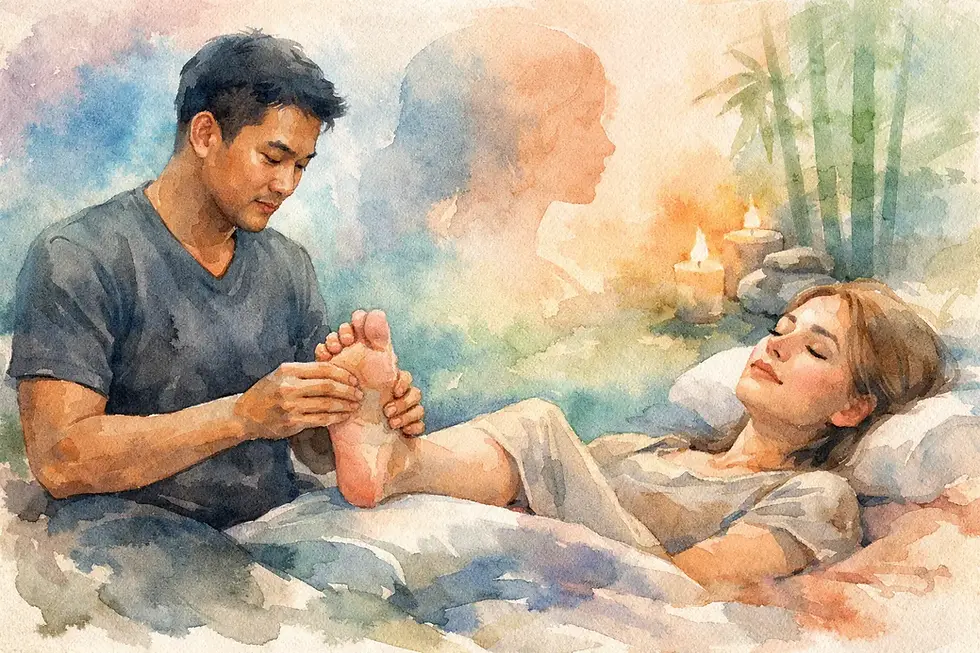
Foot reflexology can be an excellent choice for people who need grounding. The feet carry us through every demanding day, and focused work there may help the whole body feel calmer without requiring a full-body massage.
Hot stone therapy offers comforting heat for cold, tense, tired muscles. It can be beautiful for stress relief, although it may not be appropriate for everyone, especially those with reduced heat sensitivity, acute inflammation, or certain circulation concerns.
Lymph drainage is much lighter than a conventional massage. It may be supportive for puffiness, sluggishness, or a feeling of heaviness, but it is not a treatment for every emotional need. A qualified therapist should review your health history first, particularly if you have heart, kidney, infection, cancer-related, or vascular concerns.
How to choose a therapist you can trust
The therapeutic relationship matters as much as the treatment name. Before you decide, look for training, relevant certifications, and a practitioner who continues to learn across both traditional and health-informed approaches. Experience in respected professional spas can also show that a therapist understands standards of care, hygiene, communication, and client safety.
Just as important is how the practitioner lives and works. You cannot judge someone’s health by appearance alone, but you can notice whether they embody calm professionalism, attentive listening, clean practice, and respect for the work. A therapist who values rest, movement, nourishment, and ongoing self-care is more likely to understand that healing is not a luxury. It is a practice.
Your first conversation should include a health intake form. Massage can be a deep treatment, and serious medical conditions, medications, injuries, recent surgery, pregnancy, blood clot risk, skin issues, and allergies all matter. Then comes another essential question: do you need a relaxation massage, targeted therapy, or a combination? There is no prize for choosing the strongest option.
Ask what oil will be used. Mineral oil, paraffin-based products, and baby oil can leave a slippery coating without offering the same skin-nourishing quality as plant oils. High-quality coconut, almond, or sesame oil, ideally organic and food-grade, is a more natural choice for many clients. Still, natural does not automatically mean safe for every person. Nut allergies and skin sensitivities must be discussed.
Your breath is part of the treatment
Breathing is one of the simplest ways to tell your body that it does not need to fight the massage. Try not to perform relaxation or force big breaths. Instead, notice the natural exhale. When pressure reaches a tender place, a slow exhale can reduce guarding and help the therapist work with your body rather than against it.
You also have permission to speak. Say if you are cold, uncomfortable, overwhelmed, in pain, or simply not ready for a certain area to be touched. Silence is welcome, but communication is part of trust.
Aftercare protects the calm you created
Do not rush straight back into noise if you can avoid it. Arrive about 10 minutes early, shower beforehand, and let the session begin without phone calls or last-minute distractions. Your therapist needs to see and assess you in person.
Afterward, drink extra water, stay warm, and give yourself a quieter evening when possible. Avoid alcohol and intense direct sun exposure. Unless your therapist advises otherwise, let natural oil remain on the skin for at least an hour before washing. This is not about being strict. It is about allowing your body to receive the treatment fully.
For ongoing stress, bodywork every other day can be appropriate for some people during a short restorative period, while others benefit more from weekly or monthly appointments. Your response matters more than a fixed schedule. If symptoms are severe, persistent, or linked to trauma, depression, panic, or thoughts of self-harm, bodywork should be supportive care alongside qualified medical or mental health help.
At Thai Holistic Massage in Maspalomas, the intention is never simply to make muscles feel softer for one hour. It is to help you remember the inner quiet that stress has covered. Choose a treatment that meets you where you are, allow yourself to receive it without hurry, and let deep relaxation become part of how you care for your life.


Comments